The sellers who move fastest are almost never the ones working the hardest.
They are the ones who figured out which parts of the process actually matter and which parts are just noise that make you feel busy while your bank account sits still.
Over the last ten years, we have watched thousands of people go through this. The ones who hit their first sale in 30 to 60 days all had one thing in common. They stopped trying to be perfect and started following a process that already worked.
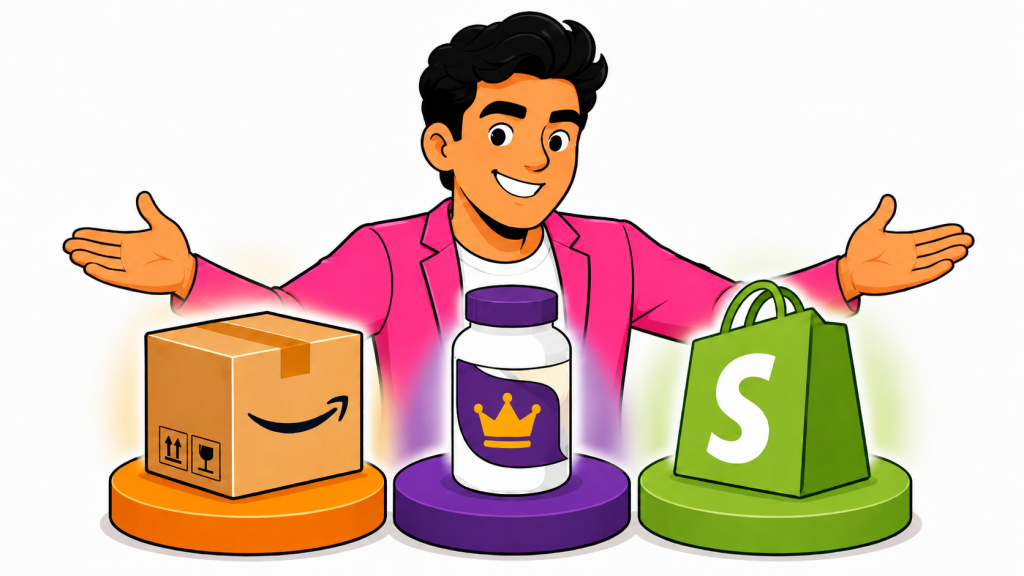
Here are the 3 models that get people there, and the weekly roadmap for each one.
Model 1: Amazon FBA Wholesale
Best for: Complete beginners who need results fast
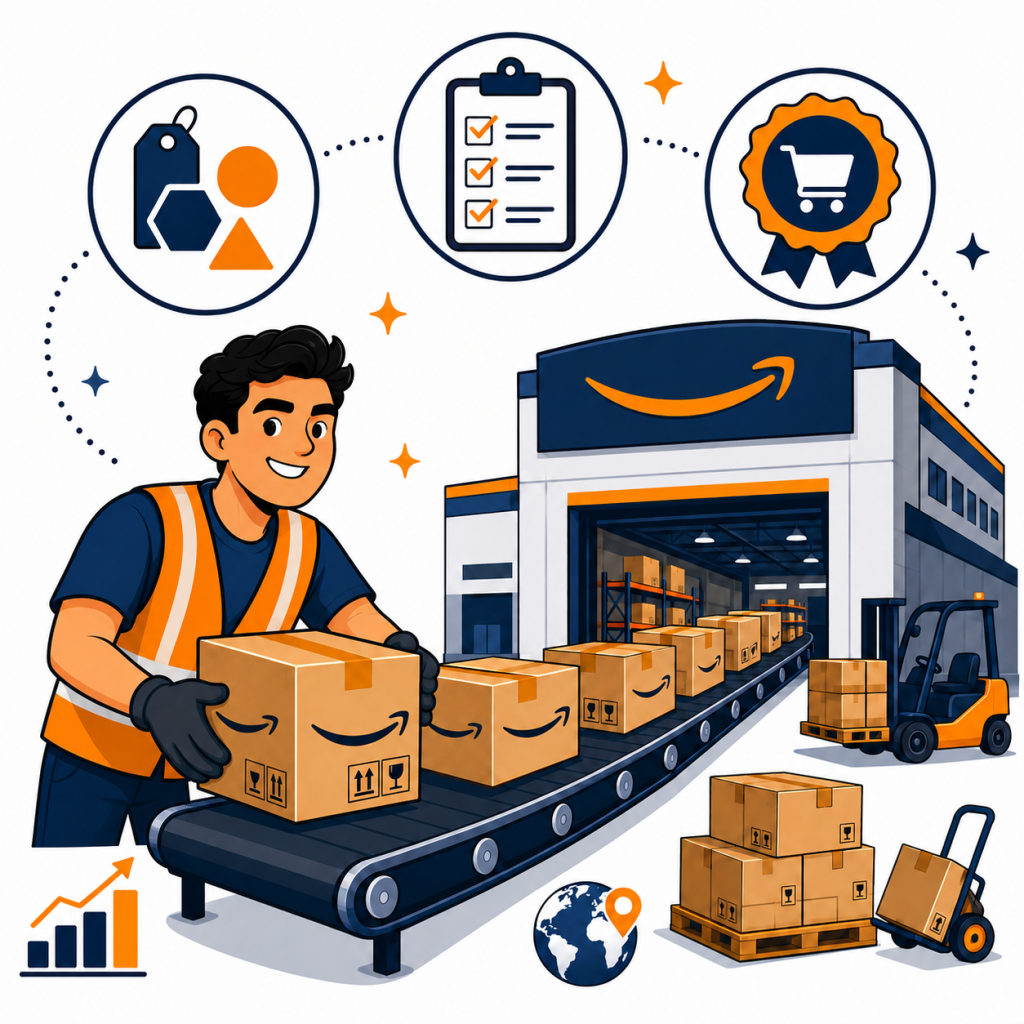
Amazon FBA means Amazon stores, packs, and ships your products for you. Wholesale means you are selling brand name products that already have a proven sales history.
You are not inventing anything. You are connecting supply to demand that already exists.
Your 60 Day Wholesale Roadmap
Week 1: Find Your Products
- Use a tool like SmartScout to find brands already selling well on Amazon with low seller competition
- Look for products with consistent sales volume, not seasonal spikes
- Target products doing $100K in annual Amazon sales but with fewer than 5 sellers on their listings
- Make a list of 50 to 100 target brands in minutes, before you contact a single one
Week 2: Reach Out to Brands
- Apply directly on each brand’s wholesale page or email their sales department
- Keep your message short and professional. You are a retailer looking to carry their product on Amazon
- Expect most to say no. That is normal. You need 1 yes, not 20
- Set up your Amazon Seller Central account while you wait for approvals
Week 3: Place Your First Order
- Start small. One product, one brand, enough inventory to test a week of sales
- Ship directly to an Amazon fulfillment center using their FBA prep guidelines
- Set your price to match the Buy Box
Week 4 to 60 Days: Sell and Repeat
- Amazon drives the traffic. Your job is to stay in stock and watch your numbers
- Reinvest your first profits into deeper reorders and a second product
- Use SmartScout to keep building your brand list in the background week to week
Model 2: Amazon Private Label
Best for: People who want to own something long term
Private label means you put your own name and branding on a product, then sell it on Amazon as your own. When it works, nobody can undercut you. You own the listing. You set the price.
Your 60 Day Private Label Roadmap
Week 1: Research Your Product
- Use Helium 10 or SmartScout to find product categories with steady demand and low competition
- Look for generic products with at least 100 monthly sales across the subcategory but no dominant brand
- Avoid anything seasonal, fragile, hazmat, or oversized as a first product
- Narrow your list to 3 to 5 cheaper (<$20) candidates before moving forward initially
Week 2: Find Your Supplier
- Search Alibaba, Rakuten, DHgate for manufacturers already producing your product type
- Contact 8 to 10 suppliers with a short message asking about minimum order quantities and sample costs
- Order samples from your top 2 or 3 before committing to anything
- While you wait, start building your Amazon Seller Central account
Week 3: Finalize Your Product and Place a Small Order
- Choose your supplier based on sample quality, communication, and price
- Order the smallest batch they will allow. You are testing, not betting everything
- Begin creating your Amazon listing while your inventory is in production. Photos and copy matter more than most beginners realize
- Look at the top competitors of the same value to emulate optimization, use AI for copywriting
Week 4 to 60 Days: Launch and Watch
- Send inventory to Amazon FBA when it arrives
- Run a small Amazon Sponsored Products ad campaign with a modest daily budget to start generating traffic
- Watch your conversion rate closely. If people are clicking but not buying, your listing needs work, not more ad spend
- Use this time to keep researching your next product so you are never starting from zero again

Model 3: Shopify
Best for: People who already have a small audience or a specific product idea
Shopify is your own store. Your rules. And most importantly, your customer list.
When you sell on Amazon, Amazon owns the buyer relationship. When you sell on Shopify, you collect the email. You follow up. You sell again next month.
Your 60 Day Shopify Roadmap
Week 1: Pick Your Product and Niche
- Choose one product or a tight product category built around a specific type of person
- The narrower your focus, the easier it is to find and attract buyers
- Validate demand before you build anything. Search the product on Amazon and Etsy to confirm people are already buying it
- Set up your Shopify store using one of their basic templates. Do not over design it at this stage
Week 2: Build the Store and Your First Audience
- Get your product pages live with clear photos and simple, honest descriptions
- Create one social media account on the platform where your target buyer already spends time
- Start posting valuable content to that buyer, not just product promotion
- Set up a basic email capture on your store with a small incentive like a discount or a free guide
Week 3: Drive Your First Traffic
- Post consistently on your social account every day this week. Volume matters early
- If you have any budget, run a small Meta ad to a warm audience targeting people who match your buyer
- Reach out to 5 to 10 small content creators in your niche about featuring your product. Micro creators with 5,000 to 20,000 followers often convert better than big names and cost far less
- Email the small list you have started building, even if it is only a few dozen people
Week 4 to 60 Days: Build the Engine
- Focus on two things only: growing your email list and creating content that drives people to it
- Your email list is the asset. Social media is just the funnel that feeds it
- Test one paid traffic source at a time. Do not run Facebook ads and Google ads and TikTok ads simultaneously when you are starting out
- Review your store analytics weekly. Find where people are dropping off and fix that one thing before moving to the next

Which One Is Right for You
Best Starting Point | Time to First Sale | Owns the Customer | |
FBA Wholesale | Tight budget, need speed | 30 to 60 days | No |
Private Label | Patient, want long term upside | 60 to 90 days | No |
Shopify | Have an audience or niche idea | Varies | Yes |
The 60 days start when you do.
Not when conditions are perfect. Not when you have read one more article. When you start.