Market shifts create winners and losers. Right now, the window is wide open for those ready to move. The 2026 tariff landscape is the single biggest growth opportunity we’ve seen in a decade. The most resilient businesses don’t rely on a single point of failure.
Right now, the “old way” of selling is hitting a wall:
- The De Minimis loophole is dead: International sellers can no longer bypass duties.
- Electronics are crushing margins: Some categories are seeing duties as high as 145%.
- Home Goods are spiking: Costs are up 25% across the board.
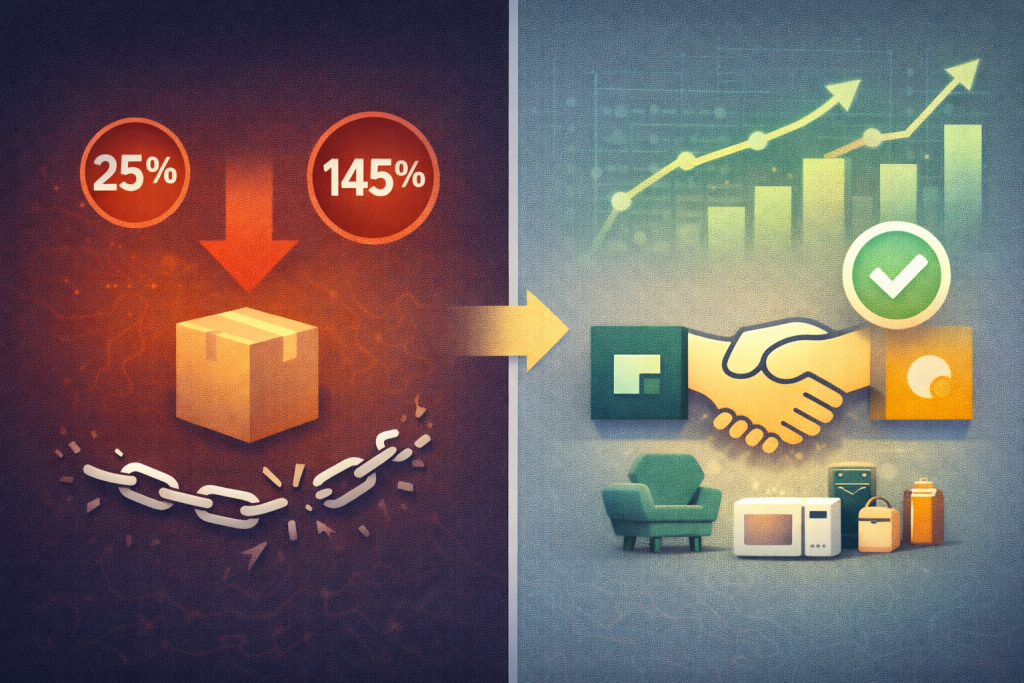
The Good News for US Sellers Those of us sourcing products from US brands and suppliers can fill all these gaps in the market. The math has changed, and it finally favors the home team. Here are three ways to capitalize on this stability today.
#1 Approach Brands That Just Lost Their Cheapest Competition
Think about what the last 18 months looked like for a mid-sized US brand selling home goods on Amazon. They were competing against Chinese sellers who were:
- Getting products into the US duty-free
- Pricing below cost to capture market share
- Operating under a completely different cost structure
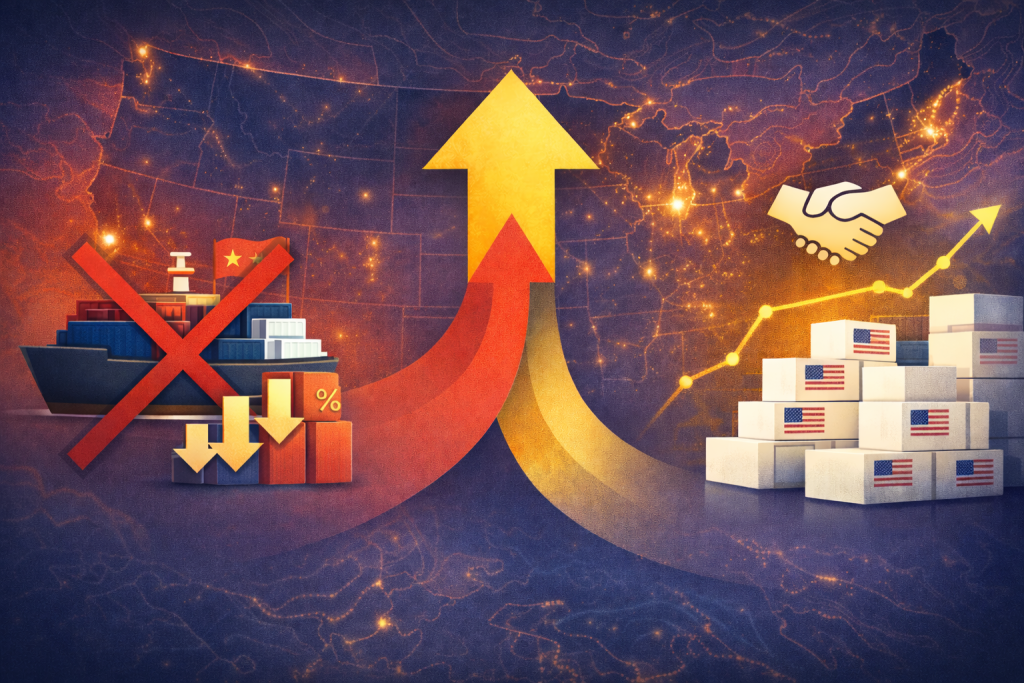
Those foreign sellers are now repricing or pulling back entirely. The buy box is opening up in categories that felt impossible to compete in a year ago for US goods.
What that US brand needs right now is a reliable wholesale partner who can move volume. You come prepared with category data, show them you understand their business, and make the case. Brands that said no six months ago are having very different conversations today.
#2 Use the Price Compression to Negotiate Better Terms
When tariff costs squeeze private label sellers, they pull back on inventory. When they pull back, oversaturated categories start to breathe again. That is already happening in Home, Kitchen, and Beauty among others.
The brands you want to work with are under pressure too. They want stability. That is your negotiating position. You offer:
- Consistent order volume they can rely on each month
- Professional Amazon operations that protects their IP and customers
- Long-term partnership to potentially grow the channel further
In exchange, you ask for better wholesale pricing, exclusive Amazon ASINs, or marketing/consultation fees. These arrangements were harder to get when US brands only got a trickle of market share on Amazon, now with the floodgates open they are worth pursuing from a brand’s perspective.
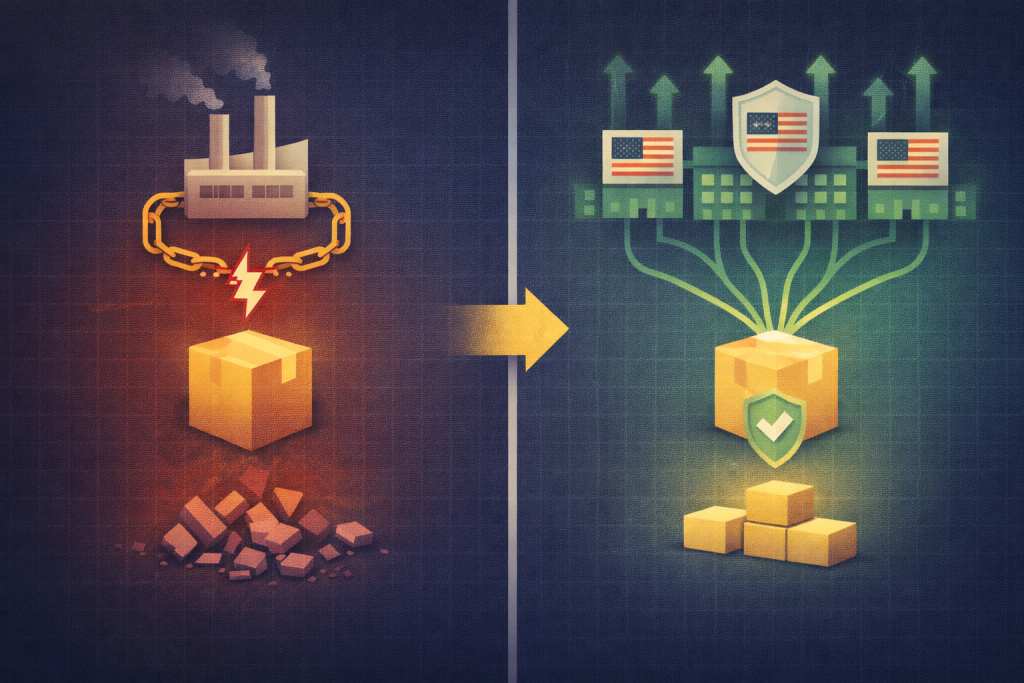
#3 Build a Supply Chain That Does Not Break When Policy Changes
The sellers blind-sided by 2026 tariffs are not bad businesspeople. They built a model that worked under a specific set of rules, and the rules changed overnight.
A wholesale model grounded in many domestic relationships does not eliminate all risk. It removes one of the biggest structural risks in ecommerce today.
When your catalog is built on US brand relationships, tariff policy grows market share on Amazon. And those relationships have real asset value that competitors cannot copy overnight. When a private label seller loses their Chinese manufacturer, they rebuild from scratch: product development, photography, listings, reviews, launch. When a wholesale seller loses one account, they go find more daily. The infrastructure is still standing.
That is a resilient business.
The Window Is Open Right Now
We came from nothing. No head start, no money, no connections. What we had was the ability to recognize when a door opened and walk through it before it closed.
This door is open right now. The brands newly available, the categories breathing again, the buy box openings that did not exist a year ago. Months from now, other sellers will be in those positions. Some of them are reading something like this today and making a move, will you?