
There is a particular kind of sale that drives us a little crazy, and it is the one that gets within an inch of the finish line and then just stops. The shopper found you, clicked through, read the product page, added the thing to their cart, and started heading for checkout. Then their phone rang, or a kid needed something, or a work message popped up, and the moment passed. The tab got closed. The order never happened.
Here is what makes that so frustrating. This was not a cold stranger who stumbled onto your site and bounced in four seconds. This was someone who did almost all the work of becoming a customer. They wanted the product enough to put it in the basket. They were one tap away. And then life got in the way, which it does to all of us.
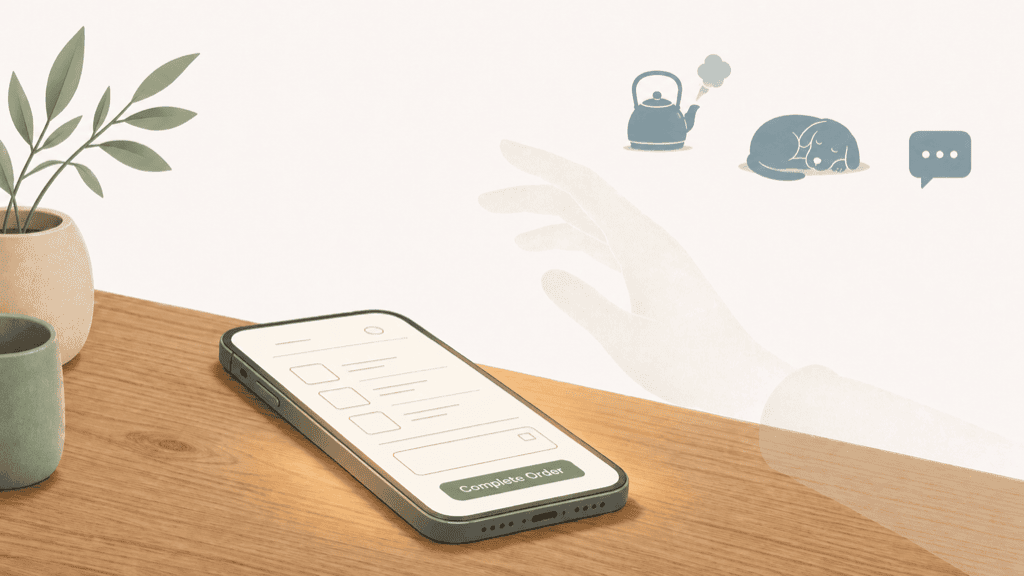
Most stores respond to that moment with exactly one email, the default “you left something behind” reminder that nearly every ecommerce platform turns on for you. It feels like the responsible thing to do, so people switch it on, tick the box, and assume that part of the funnel is handled. But one polite reminder treats a hesitation like it was simple forgetfulness, and those are two very different problems. The buyer did not forget. Something stopped them, and a single nudge almost never answers whatever that something was.
The Open Door Sequence
We want you to stop thinking about an abandoned cart as a lost sale and start thinking about it as a door that was left open. The shopper walked right up to it, paused on the threshold, and then got pulled away. You are not trying to chase them down the street. You just want to leave the light on and give them an easy, honest way back whenever they are ready.
The Open Door Sequence does that with three short emails, and the whole point is that each one has a completely different job. One reminder cannot do three jobs at once, which is exactly why the default setup underperforms so badly.
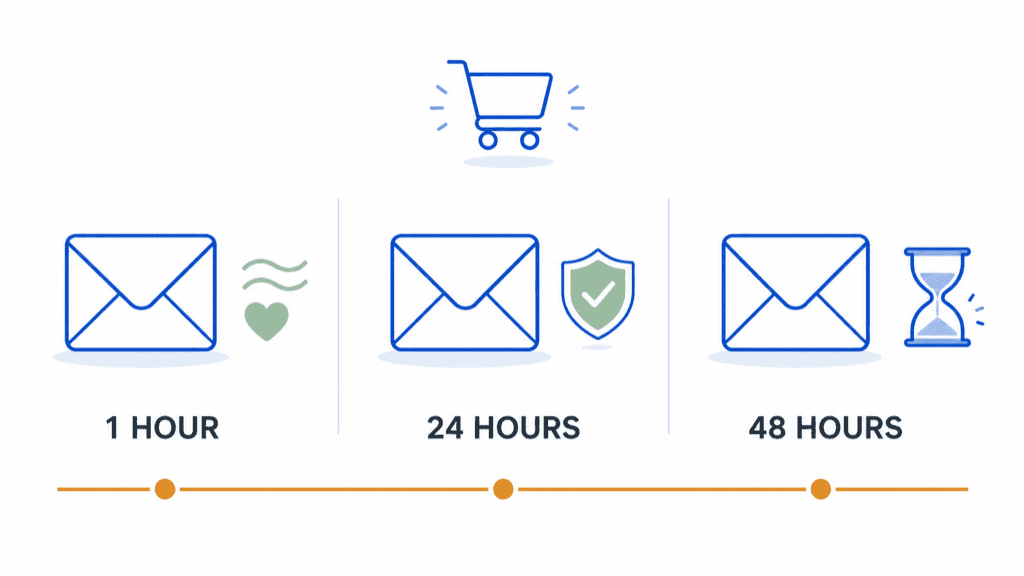
Knock one: The Easy Way Back (about an hour later)
The first email goes out roughly an hour after the cart stalls, and its only job is to make coming back effortless. No discount, no urgency, no pressure of any kind. You are not selling here, because they already sold themselves. You are just holding the door.
Keep it to two or three warm sentences. Something like, “Looks like your cart is still here waiting. If now is not the right moment, no problem at all. Whenever you are ready, this link takes you straight back to where you left off.” Then one image of what they picked and one button.
An hour is the sweet spot because the product is still fresh in their mind and the decision they already made is still sitting there half-finished. Almost every platform lets you trigger this automatically on a one-hour delay, so you set it once and forget it.
Knock two: The Honest Answer (about a day later)
The second email goes out around 24 hours later, and this one does something the first email deliberately did not. It answers the real reason they hesitated. People do not usually pause at checkout for no reason. They were not sure about the sizing, or they wanted to read a review first, or the shipping cost gave them a second of doubt, or they were not certain the thing would actually do what they hoped.
So pick the one objection you see most often, the thing that comes up again and again in your support messages and your reviews, and build this entire email around answering it. If it is trust, lead with a real customer review. If it is shipping, spell out the actual policy in plain terms. If it is whether the product delivers, show a photo or a short clip from a real buyer.
The tone that matters here is helpful, not salesy. You are not making another pitch, you are removing the specific thing that got in the way. Then you close with the same simple link back to checkout.
Knock three: The Last Light On (about two days later)
The third email lands about 48 hours after the cart first stalled, and this is the gentle closer. Soft honesty beats fake urgency every single time with this audience. No red countdown timers, no “ONLY 2 LEFT” panic, no manufactured deadline. People who have been burned before can smell that from a mile away, and it costs you trust you worked hard to earn.
Instead, give them one true reason that now is a fine time to decide. If stock on their item is genuinely getting low, say so. If you are about to release the held cart back into general inventory, tell them plainly. Something like, “We are going to clear your cart in the next day or so to free the items up for other shoppers, so if you still want them, here is the link.” That is honest and low-key, which is exactly what works on people who are tired of being pushed.
Three Real-World Scenarios
Scenario one: a small-batch coffee roaster. The most common hesitation is whether the beans will arrive fresh, so knock two leads with a recent customer line about how fast the order shipped and how good it smelled out of the bag. Knock three mentions that this month’s roast is running low, which happens to be true because small batches usually are.
Scenario two: a handmade jewelry shop. Buyers worry about whether a piece will look as good in person as it does on screen, so knock two shows a photo a real customer sent in wearing it, next to a line about the 30-day return window. Knock three notes that the piece in their cart is one of only a handful made, so once it is gone it is gone.
Scenario three: an app with a paid subscription. Here the hesitation is almost always “will I actually use this,” so knock two links to a 60-second clip of the product solving the exact problem the buyer came in with, plus the money-back guarantee. Knock three holds their intro price for one more day before it reverts to the standard rate, and says so in one plain sentence.
Why This Matters
Recovered carts are the cheapest money in your whole business, and it is not close. You already paid, in ad spend or time or content, to get that visitor to your store. They already chose the product, saw the price, and made it most of the way through. The expensive part was done before the cart ever stalled.
That is what makes this such a quietly powerful lever. Most single-email setups claw back somewhere in the range of 5 to 8 percent of abandoned carts, while a sequence that actually does three different jobs can push that several times higher. Think about what that means in real numbers. A store seeing 15 abandoned carts a month at a $60 average order is leaving around $10,800 a year sitting on the table. Pull back even a fifth of that and you have added a couple of thousand dollars a year, with zero extra ad spend, from work you already did.
Your 5-Minute Quick Win
Open your email tool right now and find the abandoned cart or checkout recovery section. You almost certainly have one default email already switched on in there. Add two more slots after it, set to fire at roughly 24 hours and 48 hours, and leave the first one at about an hour. Do not worry about perfect copy yet. Even rough placeholder wording in the right three-step structure will outperform one polished email, and you can refine the words later this week.
“But What If…”
“What if I do not have an email platform set up for this?”
You very likely already do and have not noticed. Shopify, WooCommerce, BigCommerce, and Wix all ship with abandoned cart recovery built in, usually with one email already configured. Open the settings, find the recovery section, and add two more emails to the one that is already there.
“What if my store is too small for this to be worth it?”
Small is exactly when every recovered sale matters most. Even 10 stalled carts a month at a modest order value adds up to real money over a year, and the setup is a one-time job that keeps working while you sleep.
“What if three emails feels like too much?”
None of these three push. They re-open a door the buyer already walked up to, spaced out over two days so they never feel crowded. Polite re-entry on someone’s own schedule is not pressure, it is good service.
Most recovery setups give up after one knock. They send the single reminder, mark the task done, and quietly leave the rest of those almost-customers to drift away. But people do not abandon carts because they stopped wanting the thing. They abandon because something interrupted them, and one reminder rarely clears whatever that was.
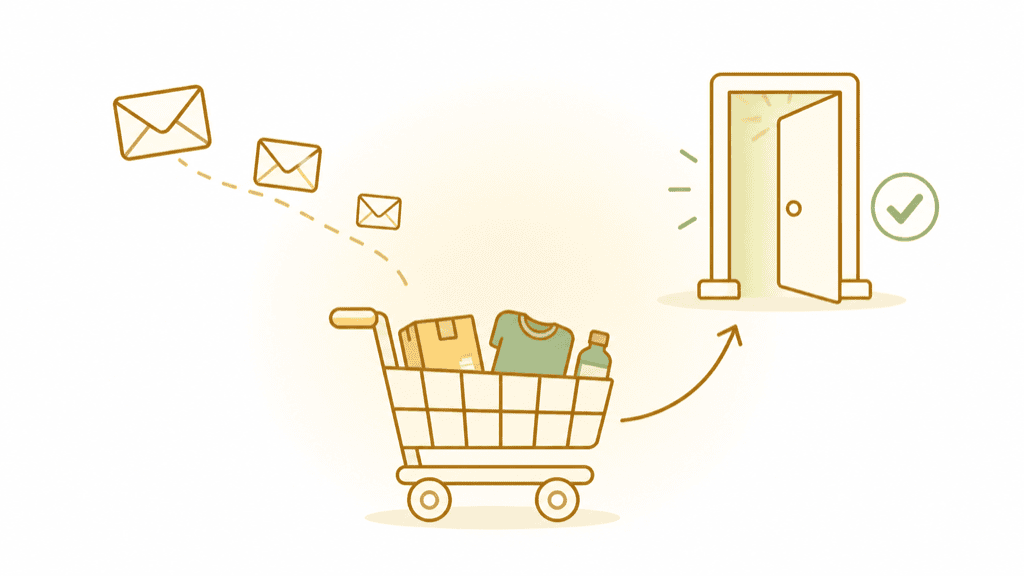
Three small emails, built once and left running, turn an almost-sale back into a sale. That is where a surprising amount of the easy money in ecommerce is still hiding, in the orders you nearly had.
Talk soon,
The Wholesale Formula team