
Say you know a lot about one thing. Maybe it’s fixing up old furniture, or getting a vegetable garden going on a small budget, or finding cheap flights. You’ve thought more than once that you could make videos about it. Then you look up how YouTube pays creators, see the words “1,000 subscribers,” and quietly close the tab.
We get why. Before YouTube will put ads on your videos and share the money with you, you need 1,000 subscribers plus either 4,000 hours of public watch time in the last 12 months or 10 million Shorts views in the last 90 days. If you’re starting with zero videos and zero viewers, that sounds like a year of unpaid work before the first check.
What most beginners never hear is that ad money is the slowest money on YouTube, and it’s not where small channels earn first. The channels that get paid early skip the subscriber race entirely and put a way to earn under every video from the very first upload. You can do the same thing with no audience, no email list, and no fancy gear.
Why Ads Are the Wrong Finish Line
Ads pay you per view. Every 1,000 views earns a few dollars, and the amount swings a lot by topic. A business or money channel might keep somewhere around $5 to $25 per 1,000 views, while a hobby or entertainment channel often earns less. That’s fine for a channel pulling in hundreds of thousands of views a month, but for a small channel it adds up to pocket change, and you can’t even switch it on until you hit those thresholds.
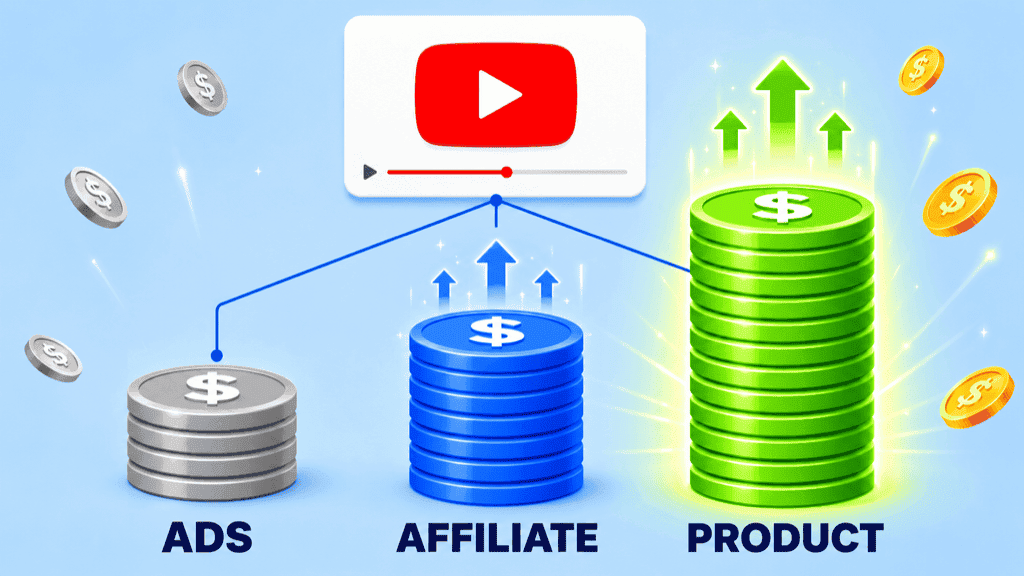
There’s a faster route, and it pays per sale instead of per view. When someone watches your video and buys the thing you recommended, you get paid, whether that video has 50 views or 50,000. That changes the math completely for a beginner.
The two ways to do it:
- Affiliate links. You recommend a product someone else already makes, using your own tracking link, and earn a commission when a viewer buys. No product to create, no customer service, and you can start on day one.
- A small product of your own. A simple guide, checklist, or template priced around $27 to $37. You keep nearly all of the money. Most beginners are better off starting with affiliate links and adding this later, once they can see what viewers keep asking about.
Sponsorships and viewer tips exist too, but they come later, once you’re reliably getting a few thousand views per video. Don’t build your plan around them.
What One Small Video Can Actually Earn
Let’s put rough numbers on a single video that gets 2,500 views. Not a viral hit, just a useful video on a topic people search for.
| How it earns | The rough math | What that video brings in |
|---|---|---|
| Ads | Not switched on yet (and even at $10 per 1,000 views, it would be about $25) | $0 for now |
| Affiliate link | 2% of viewers click (50 clicks), 4% of them buy, $30 commission each | about $60 |
| Your own $37 guide | Same 50 clicks, 4% buy | about $74 |
These are good-case numbers for a tightly focused video with a clear reason to click, so treat them as an illustration, not a promise. But look at the pattern. The ad column is empty, and the other two don’t care how many subscribers you have. Two decent videos pointing at the right offer can get you past your first $100 before the ad door even opens.
Decide What Pays Before You Film Anything
Most people start a channel by picking a topic and hoping money shows up later. Flip that around. Before you think about cameras or thumbnails, answer one question: when someone finishes watching, what do you want them to click?
Pick a topic where the answer is obvious. A few examples:
- Budget gardening: a seed-starting kit or a raised bed you actually use, linked in every video.
- Furniture flipping: the sander, paint, and brushes you rely on, each with an affiliate link.
- Cheap travel: the carry-on bag you swear by or the hotel booking site you always check first.
- Small-business bookkeeping: the accounting software you recommend, which tends to pay well because buyers stay subscribed.
When the topic and the offer belong together, the recommendation never feels like an ad dropped into the middle of a video. It feels like help, because it is.
To find affiliate programs, search the product name plus “affiliate program,” or browse a big network like Amazon Associates, ShareASale, or Impact. Amazon is easy to join but pays small percentages, so it’s worth checking whether the brand runs its own program that pays more per sale.
Get Your Video Ready to Earn Before You Hit Upload
None of this needs an audience. It just means that when the right viewers do show up, your video is ready to earn from them instead of sending them away empty-handed.
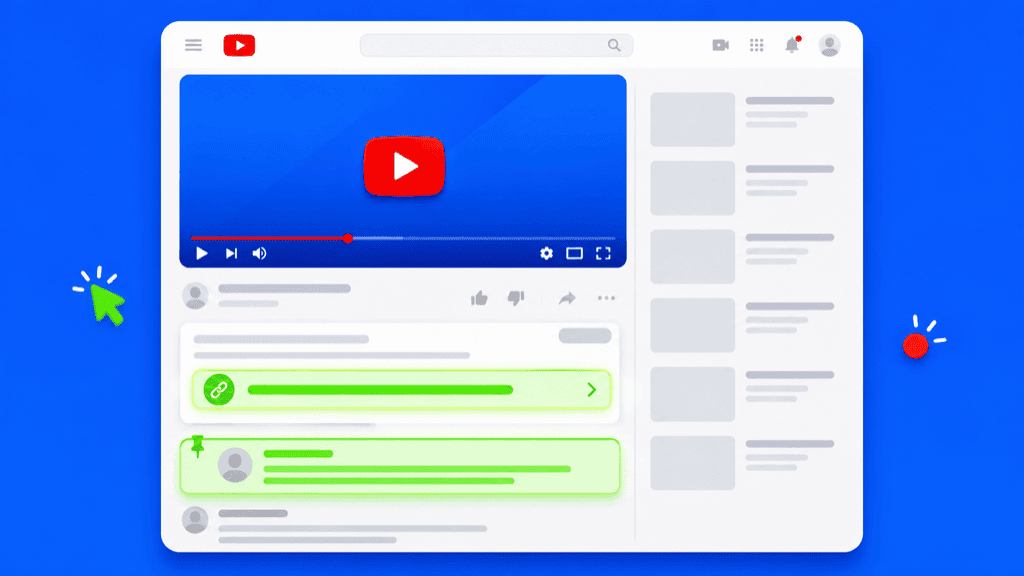
- Turn on advanced features in YouTube Studio (it’s free and usually just means verifying your phone number), so the links in your description and comments are clickable.
- Save your link somewhere you can grab it fast, with one offer per video.
- Put the link at the top of your description, in the first line or two, so it shows before someone has to click “more.”
- Pin a comment that repeats the link and gives one plain reason to click it.
- Disclose the commission in two places. Say it out loud in the video when you recommend the product (“if you buy through my link, I earn a small commission”), and add the same line next to the link in your description. The FTC expects the disclosure in the video itself, not just in the description, and viewers trust you more for it.
- Start with regular videos, not Shorts. Links in Shorts descriptions aren’t clickable, so a Short can’t send anyone straight to your offer.
Making Videos Without Dreading It
Most new channels stall because every video starts to feel like a weekend of work. AI takes a lot of that weight off, mostly by getting rid of the blank page.
You don’t need a big stack of tools. Three free or cheap ones cover almost everything:
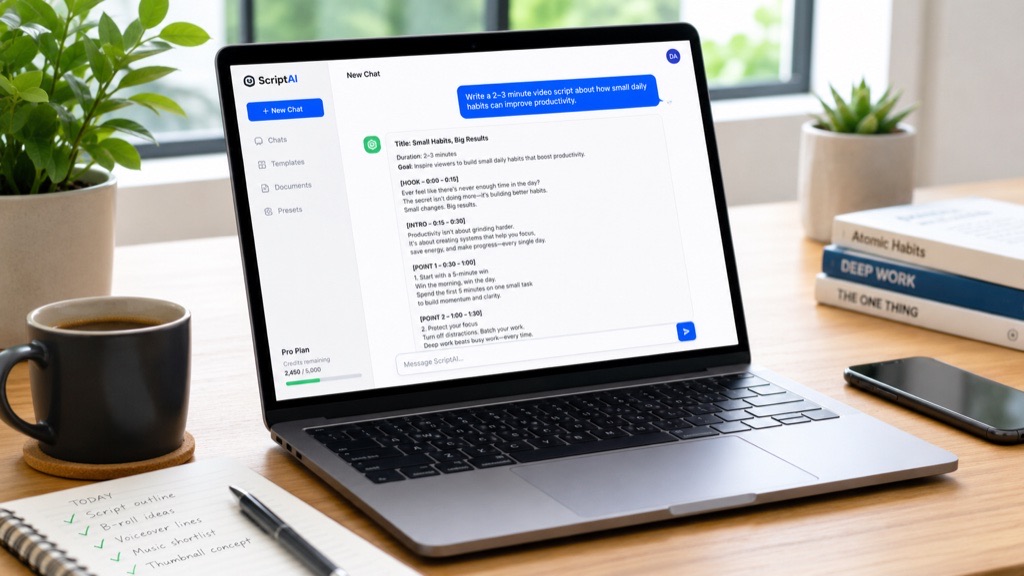
- A chat tool like ChatGPT or Claude for video ideas, outlines, scripts, titles, and descriptions. You still bring the real experience and opinions, but it gets you to a first draft in minutes.
- Canva for thumbnails, using its templates so you don’t need any design skill.
- CapCut for editing, with automatic captions built in.
Shy about being on camera? Plenty of channels never show a face. You can record your screen or your hands at work, use simple slides, or have a tool like ElevenLabs turn your script into a natural-sounding voiceover.
AI won’t make a channel profitable by itself. What it does is make it a lot easier to keep publishing useful videos around the offer you already picked, and that consistency is where the money comes from.
A prompt to get your first ten video ideas
Paste this into ChatGPT or Claude and fill in the brackets:
I'm starting a small YouTube channel about [your topic].
The product or affiliate offer I want viewers to click is: [your offer].
My ideal viewer is: [who they are and what they're trying to do].

Give me 10 video ideas that people in this niche actually search for,
that lead naturally into my offer without sounding like an ad, and that
a complete beginner could make in a day. For each one, give me a working
title and one sentence on how it connects to my offer. Put the ideas most
likely to lead to a sale first.
One Video, One Next Step
When a video is done, end it with one clear ask, and it’s not “like and subscribe.” Tell viewers what you recommend, why it helped you, and that the link is at the top of the description and in the pinned comment. Then stop.
One video, one offer, one link. Viewers who get three or four different asks usually take none of them.
Your 10-Minute Move Tonight
Write down the topic you’d make videos about and the one product you’d point viewers to. Then search that product’s name plus “affiliate program” and see what it pays per sale. If it’s a few dollars or less, look for a related product that pays more. By the time you’re done, you’ll know exactly what your first video is selling, which puts you ahead of most channels that are months old.
“But What If…”
“What if nobody watches my first videos?”
Some won’t get many views, and that’s normal. But because you’re paid per sale, a video with a few hundred of the right viewers can still earn, while a bigger video with no link earns nothing. Videos on YouTube also keep getting found in search for months, so early ones often pick up views later.
“What if I don’t have anything of my own to sell?”
You don’t need to. Start with affiliate offers, where someone else has already built the product. Once you notice the questions viewers keep asking, that’s your clue for a simple $27 guide of your own.
“Isn’t YouTube too crowded now?”
Crowded with general channels, yes. A channel about one specific problem for one specific kind of person is a lot easier to get noticed with, and that’s exactly the kind of channel this approach suits.
The 1,000-subscriber mark is YouTube’s finish line for ads, and you don’t have to wait for it. Pick the one thing you’d recommend, set up your first video so it’s ready to earn from its earliest viewers, and let the subscribers come along on their own time.
On a small channel, the first $100 comes from what you point people to, not from how many people are watching.
Talk soon,
The Wholesale Formula team